Buttery Homemade Croissants
Highlighted under: Modern Kitchen
I absolutely love baking buttery homemade croissants from scratch. It’s a rewarding experience that fills my kitchen with a heavenly aroma. The process may seem daunting at first, but once you understand how the layers of butter and dough work together, it becomes not just easy but truly enjoyable. These croissants are perfect for breakfast or as a delightful snack throughout the day. I can't wait to share this recipe with you so that you can experience the joy of fresh croissants right from your oven!

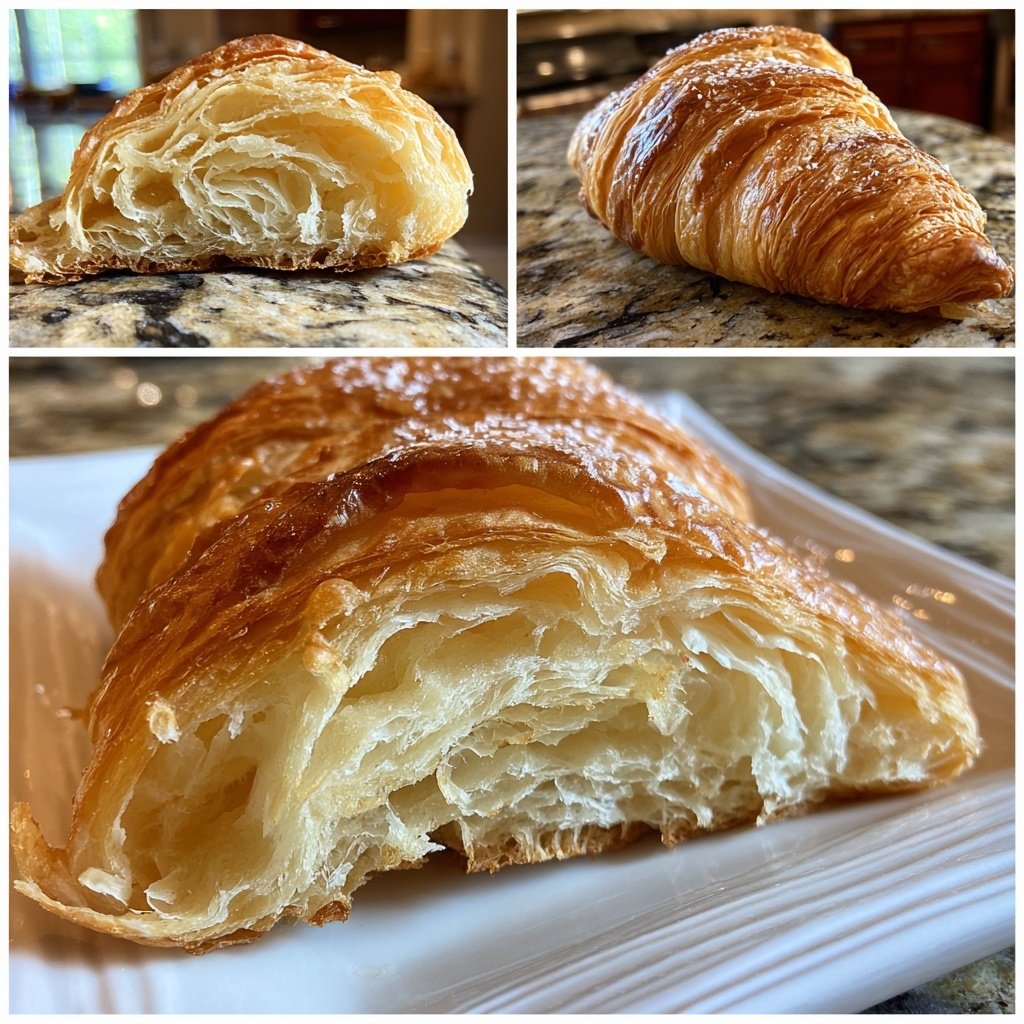
When I first attempted making croissants, I was both excited and intimidated. The key to getting that perfect flaky texture lies in the lamination process, where the dough is repeatedly folded and rolled with layers of butter. I found it helpful to chill the dough between folds to keep everything firm and manageable. Once baked, the croissants puff up beautifully, and the golden crust is just irresistible.
Another tip I discovered is to allow the croissants to rise until they are puffy and almost double in size. This final grow gives them that airy texture we all love. My family and friends were amazed at how these beauties turned out, and I'm certain you'll impress your loved ones too with this recipe!
Why You Will Love This Recipe
- Flaky layers that melt in your mouth
- Rich buttery flavor that's unrivaled by store-bought versions
- A rewarding baking project that fills your home with delightful scents
Mastering the Lamination Process
Laminating dough is the secret to achieving the rich, flaky layers in croissants. The key is to ensure that your butter is chilled and pliable, not too soft. If it melts into the dough, your croissants will lose that desired flaky texture. When pounding the butter, aim for a uniform thickness of about 1/4 inch. This ensures even distribution during the folds, creating layers that will puff beautifully in the oven.
During the folding process, try to maintain even pressure and avoid tearing the dough. Each fold should be gentle yet firm; roll the dough out using even strokes, and remember to dust your work surface and rolling pin lightly with flour to prevent sticking. Trust the process and don’t rush through this step, as it's crucial for that signature croissant texture.
The Importance of Proper Proofing
Proofing is just as essential as the lamination process to create airy and fluffy croissants. In this step, the dough is allowed to rise, developing both flavor and structure. Make sure to cover the croissants lightly with plastic wrap to prevent them from drying out. Ambient temperature will affect proofing time, so check your kitchen; warmer temperatures may reduce the rise time to about 1.5 hours.
You'll know the croissants are ready to bake when they're puffed up and have doubled in size. A visual cue is to gently press the dough with a finger; if it springs back slowly but leaves a slight indentation, they are perfectly proofed. This stage is critical for a soft interior, so don't skip it!
Storing and Reheating for Freshness
Croissants are best enjoyed fresh, but you can store them for later enjoyment. Allow them to cool completely, then place them in an airtight container at room temperature for up to two days. If you want to keep them longer, freeze them after baking—just be sure to wrap them tightly in plastic wrap and then in aluminum foil to prevent freezer burn. They can be kept for up to three months in the freezer.
To reheat, preheat your oven to 350°F (175°C). Place the croissants directly on the oven rack for about 8-10 minutes. This method will help restore their flaky texture much better than microwaving, which can make the croissants chewy. Enjoy that freshly baked taste again!
Ingredients
Dough
- 4 cups all-purpose flour
- 1/4 cup granulated sugar
- 2 teaspoons salt
- 2 teaspoons active dry yeast
- 1 1/4 cups whole milk (warm)
- 1 cup unsalted butter (chilled)
For Brushing
- 1 egg (beaten)
- 1 tablespoon water
Make sure all ingredients are at the proper temperature for best results!
Instructions
Prepare the Dough
In a mixing bowl, combine warm milk and sugar, then sprinkle the yeast on top. Let it sit for 5 minutes until frothy. In another bowl, whisk together flour and salt. Gradually add the milk mixture to the flour, mixing until a shaggy dough forms. Knead on a floured surface for about 10 minutes until smooth.
Laminating the Dough
Roll the dough into a rectangle, about 1/2 inch thick. Take the chilled butter and pound it into a flat rectangle. Place it in the center of the dough and fold the sides over the butter. Roll out the dough again to a rectangle and fold it into thirds. Repeat this process two more times, chilling the dough for 30 minutes between folds.
Shaping Croissants
After the final fold, roll the dough out to about 1/4 inch thick. Cut the dough into triangles and roll them from the wide end to the tip. Place on a baking sheet lined with parchment paper. Repeat with remaining dough.
Proofing
Cover the croissants lightly with plastic wrap and let them rise until doubled in size, about 2 hours.
Baking
Preheat the oven to 400°F (200°C). Brush the risen croissants with the egg wash mixture. Bake for 20-25 minutes until golden brown and flaky. Remove from the oven and let cool slightly before serving.
Enjoy your freshly baked croissants with jam, butter, or your favorite filling!
Pro Tips
- Make sure to keep the butter cold to achieve the best layers. Also, don't rush the proofing time for perfect texture.
Ingredient Insights
Using whole milk is crucial for a richer flavor and a tender texture in your croissants. The fat content in whole milk helps to keep the dough moist while enhancing the overall buttery taste. If you're looking for a lighter version, you might consider using low-fat milk, but keep in mind that it may affect the final texture and flavor slightly.
All-purpose flour works well for croissants, but if you have bread flour on hand, it can add more structure due to its higher protein content. Just be cautious, as it might result in a denser dough if overworked. Always make sure to measure your flour accurately, either by weight or spooning and leveling it in your measuring cup.
Common Issues and Solutions
If your croissants don't rise properly during proofing, it may be due to inactive yeast. Always check the expiration date of your yeast and ensure that your milk is warm, not hot, as excessive heat can kill the yeast. If the dough feels too dry during mixing, add a tablespoon of warm milk to bring it together.
Overbaking croissants can lead to a dry texture—watch them closely as they bake. They should be a beautiful golden brown, and the aroma filling your kitchen will be unmistakable! Remember, every oven is different; sometimes slight temperature adjustments may be necessary for perfect results.
Questions About Recipes
→ Can I make the dough in advance?
Yes, you can prepare the dough and refrigerate it overnight. Just make sure to let it come to room temperature before rolling.
→ What type of flour should I use?
All-purpose flour works well, but using bread flour can yield even flakier results due to higher gluten content.
→ How do I store leftover croissants?
Store the croissants in an airtight container at room temperature for up to 2 days or freeze for longer storage.
→ Can I fill the croissants with chocolate or almond paste?
Absolutely! Just place the filling at the wide end before rolling them up.
Buttery Homemade Croissants
Created by: Rhiannon Sutherland
Recipe Type: Modern Kitchen
Skill Level: Intermediate
Final Quantity: 12 croissants
What You'll Need
Dough
- 4 cups all-purpose flour
- 1/4 cup granulated sugar
- 2 teaspoons salt
- 2 teaspoons active dry yeast
- 1 1/4 cups whole milk (warm)
- 1 cup unsalted butter (chilled)
For Brushing
- 1 egg (beaten)
- 1 tablespoon water
How-To Steps
In a mixing bowl, combine warm milk and sugar, then sprinkle the yeast on top. Let it sit for 5 minutes until frothy. In another bowl, whisk together flour and salt. Gradually add the milk mixture to the flour, mixing until a shaggy dough forms. Knead on a floured surface for about 10 minutes until smooth.
Roll the dough into a rectangle, about 1/2 inch thick. Take the chilled butter and pound it into a flat rectangle. Place it in the center of the dough and fold the sides over the butter. Roll out the dough again to a rectangle and fold it into thirds. Repeat this process two more times, chilling the dough for 30 minutes between folds.
After the final fold, roll the dough out to about 1/4 inch thick. Cut the dough into triangles and roll them from the wide end to the tip. Place on a baking sheet lined with parchment paper. Repeat with remaining dough.
Cover the croissants lightly with plastic wrap and let them rise until doubled in size, about 2 hours.
Preheat the oven to 400°F (200°C). Brush the risen croissants with the egg wash mixture. Bake for 20-25 minutes until golden brown and flaky. Remove from the oven and let cool slightly before serving.
Extra Tips
- Make sure to keep the butter cold to achieve the best layers. Also, don't rush the proofing time for perfect texture.
Nutritional Breakdown (Per Serving)
- Calories: 300 kcal
- Total Fat: 20g
- Saturated Fat: 12g
- Cholesterol: 60mg
- Sodium: 150mg
- Total Carbohydrates: 28g
- Dietary Fiber: 1g
- Sugars: 6g
- Protein: 5g